
Why Machine Tools Need Rotary Joints
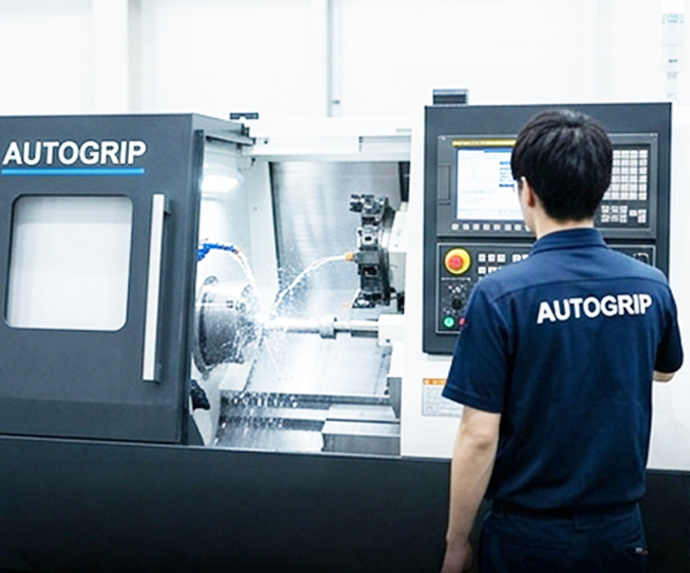
In CNC machine tools, power chucks, rotary cylinders, and 4- or 5-axis rotary tables, coolant, compressed air, and hydraulic oil often need to be transferred continuously while components rotate.
Directly connecting hoses to rotating components can lead to twisting, fatigue, leakage, pressure loss, and unexpected downtime.
A properly selected rotary joint is therefore more than a fluid-transfer component—it is an important interface for machining stability and reliable automation.
Selecting the Right Rotary Joint for Different Media
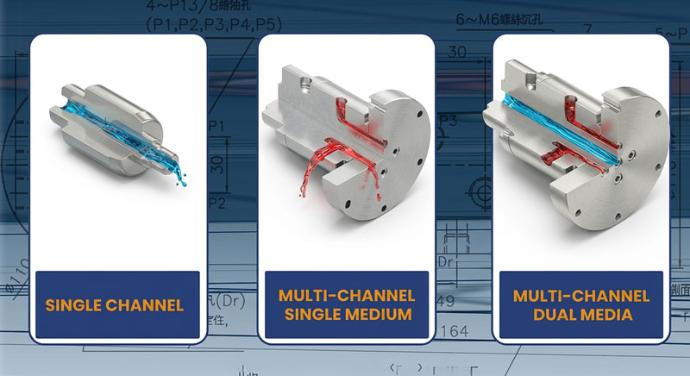
Different media require different sealing, pressure, and operating considerations:
- Coolant Transfer: Focuses on wear resistance and contamination control for stable high-pressure coolant delivery.
- Compressed Air Transfer: Commonly used for pneumatic clamping, part-presence sensing, and air blow-off, requiring stable sealing and responsive operation.
- Hydraulic Oil Transfer: Used for rotary cylinders and fixtures requiring high clamping force; operating pressure and circuit configuration should be confirmed.
AUTOGRIP RJ Series: Flexible Solutions for
Machine Tools and Automation
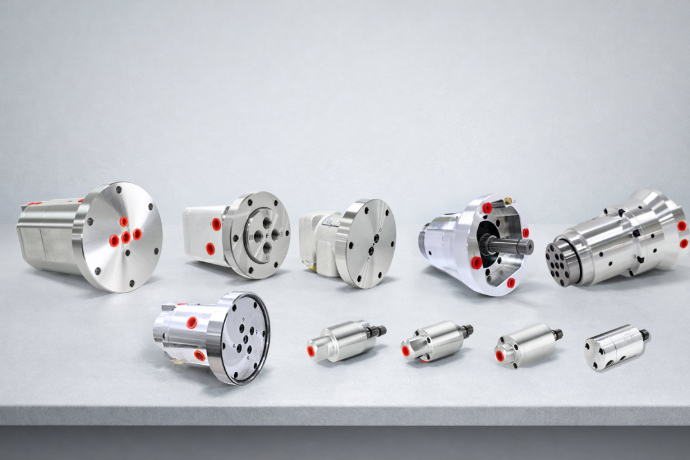
- Versatile Configurations: Available in single-passage, coolant, hydraulic, air, and combined air-and-hydraulic configurations.
- Independent Sealing and Flow Paths: Combined RJ models separate hydraulic and air circuits to reduce the risk of cross-leakage and media mixing.
- Flexible Port Layouts: Rear and side-entry configurations help simplify hose routing and improve maintenance access.
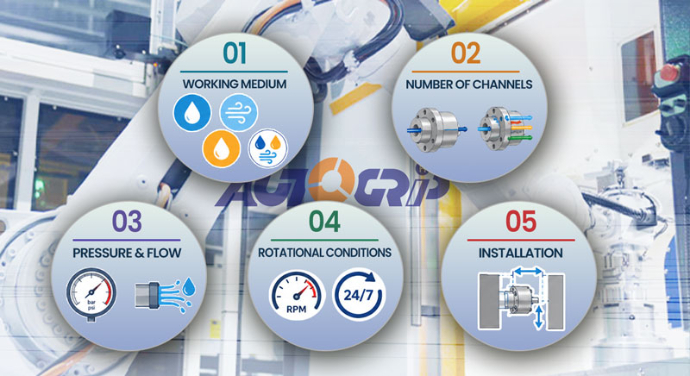
5 Key Factors When Selecting a Rotary Joint
01 | Working Medium: Coolant, compressed
air, hydraulic oil, or combined media?
02 | Number of Channels: Single passage or multiple independent channels?
03 | Pressure & Flow: What are the actual maximum pressure and required flow
rate?
04 | Rotational Conditions: Maximum RPM, duty cycle, and vibration conditions?
05 | Installation: Rear-entry or side-entry? Is sufficient installation space
available?
Q&A
A: First, identify the media to be transferred, such as compressed air, hydraulic oil, or coolant, and determine the required number of independent channels. Multi-channel or combined rotary joints can be selected when different media need to be transferred simultaneously.
A: Key information includes the working medium, number of channels, operating pressure, flow rate, maximum rotational speed, installation method, and port specifications. AUTOGRIP can help confirm a suitable rotary joint based on your actual equipment and operating conditions.
Build a More Stable Rotary Transfer System with
AUTOGRIP
Whether you are developing a CNC machine tool, upgrading a multi-axis fixture, or looking for a fluid-transfer solution for a rotary cylinder, AUTOGRIP MACHINERY provides standard and customized RJ Series Rotary Joints.
Share your operating conditions and application
requirements with the AUTOGRIP technical team to identify a suitable rotary
joint configuration.