
In the fast-evolving landscape of 2026 precision manufacturing, the procurement department sits at a critical intersection between cost management and production efficiency. When you are tasked with sourcing a cnc lathe chuck or a cnc machine chuck, the specifications sheet often lists diameter, maximum speed, and gripping force. While these are essential starting points, they tell only half the story.
As a team deeply embedded in the machine tool industry—spanning engineering, market analysis, and operations—we often see a disconnect. Procurement teams optimize for upfront capital expenditure (CAPEX), while shop floor managers struggle with operational expenditure (OPEX) caused by suboptimal workholding.
Today, we are shifting the conversation. We are diving deep into the three "hidden" indicators that determine the true value of a chuck: Structural Rigidity, Repeat Positioning Accuracy, and Maintenance/Consumable Costs. Understanding these factors is the key to mastering Total Cost of Ownership (TCO) in 2026 and beyond.
Great stories have a personality. Consider telling a great story that provides personality. Writing a story with personality for potential clients will assist with making a relationship connection. This shows up in small quirks like word choices or phrases. Write from your point of view, not from someone else's experience.
1. Structural Rigidity: The Foundation of Machining Performance
When we talk about rigidity in a cnc machine chuck, we aren't just talking about the hardness of the metal. We are referring to the entire system's ability to resist deformation under dynamic load—a critical factor as we see cutting speeds continue to increase in modern turning centers.
Static vs. Dynamic Rigidity
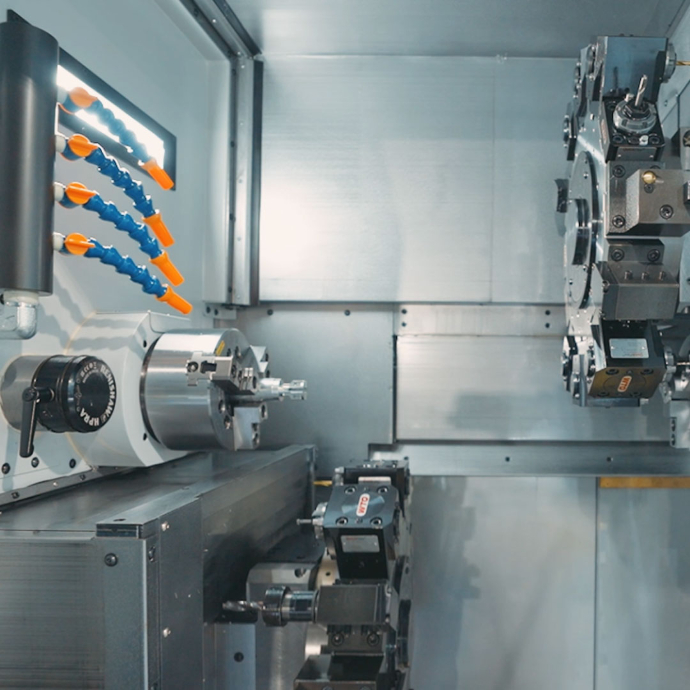
Most datasheets provide static gripping force numbers. However, machining is a dynamic process. As the spindle ramps up to 4,000 or 6,000 RPM, centrifugal force naturally reduces the gripping force of the jaws. A chuck with poor structural rigidity will suffer from "jaw lift," where the jaws tilt slightly under pressure.
Great stories have a personality. Consider telling a great story that provides personality. Writing a story with personality for potential clients will assist with making a relationship connection. This shows up in small quirks like word choices or phrases. Write from your point of view, not from someone else's experience.
Why this matters to the buyer: If the chuck body lacks rigidity, the workpiece vibrates. Vibration leads to:
- Reduced Tool Life: Carbide and ceramic inserts chip faster, increasing consumable costs.
- Poor Surface Finish: Requiring secondary operations (polishing/grinding), which creates bottlenecks.
- Dimensional Instability: Parts fail quality control (QC), leading to scrap—an unacceptable waste in the resource-conscious market of 2026.
The Material Difference
High-rigidity chucks utilize high-tensile alloy steels that are heat-treated and ground. When evaluating suppliers, ask about the material composition of the chuck body. A lower-cost chuck often uses softer metals or inferior heat treatment processes, which might save 15% upfront but will cost the company significantly in wasted inserts and scrapped parts over the fiscal year.
2. Repeat Positioning Accuracy: The Key to Automation
In the modern manufacturing landscape, automation is no longer a luxury; it is the standard. However, automation is useless without consistency. This is where Repeat Positioning Accuracy (Repeatability) becomes the most critical metric for a cnc lathe chuck.
Accuracy vs. Repeatability
It is vital to distinguish between these two concepts:
- Accuracy: How close the chuck centers the part to the true spindle axis on the first try.
- Repeatability: When you unclamp a finished part and clamp a new raw blank, does the chuck return to the exact same position?
For a human operator, a slight variance is manageable; they can tap the part with a mallet to true it up. For a robotic arm or a bar feeder—commonplace in 2026 factories—a variance of 0.02mm can result in a crash, a broken tool, or a part machined off-center.

The Mechanism of Consistency
High repeatability is achieved through precise internal components—specifically the wedge plunger and the master jaws. If the internal tolerances between the wedge and the body are loose, the jaw position will drift over time.
The Procurement Takeaway:
If your production line involves mass production, robotic loading, or high-precision turning, you cannot compromise on repeatability. A chuck specified with a repeatability of <0.01mm allows your engineering team to run "lights-out" manufacturing with confidence. A cheaper alternative with fluctuating repeatability will require constant operator intervention, negating the ROI of your automation equipment.

3. Maintenance and Consumable Costs: The Long-Term ROI
The purchase price of a chuck is a one-time event. Maintenance is forever. When analyzing a cnc lathe chuck quote, you must look at the "Life Cycle Cost."
The Hidden Cost of "Sealed"vs. "Open"
Standard open chucks are susceptible to chip ingress and coolant wash-out. Fine metal dust enters the internal mechanism, mixing with grease to create an abrasive paste that wears down the master jaws and wedge.
- Open Chucks: Cheaper to buy, but require disassembly and cleaning every few hundred hours.
- Sealed Chucks: Higher initial cost, but keep contaminants out and grease in. This drastically reduces downtime for maintenance.
Consumable Compatibility
Are the soft jaws and hard jaws standard industry sizes, or are they proprietary?
A major pain point we see is companies buying a niche chuck brand, only to find that replacement jaws have a 12-week lead time and cost 3x the market rate.
Ensuring your cnc machine chuck uses standard serration (e.g., 1.5mm x 60° or 1/16" x 90°) ensures you can source consumables locally and competitively.
Comparative Analysis: TCO over 5 Years
Below is a model comparing a "Budget Chuck" vs. a "High-Quality Chuck" (like AUTOGRIP) in a high-production environment.
| Cost Driver | Budget Brand Chuck |
High-Performance Chuck (e.g., AUTOGRIP) | Impact Analysis |
| Initial Purchase Price |
$1,500 | $2,200 | Budget option saves $700 initially. |
| Maintenance Frequency | Weekly Greasing + Monthly Disassembly | Weekly Greasing + Semi-Annual Check | High-Performance saves ~40 labor hours/year. |
| Jaw/Wedge Wear Rate | High (Replace every 18 months) | Low (Replace every 4-5 years) | Budget option requires 2-3x more replacement parts. |
| Scrap Rate (Due to Accuracy) | 1.5% | 0.2% | High-Performance saves thousands in material costs. |
| Downtime Cost | High (Frequent adjustments) | Low (Consistent running) | Massive operational savings. |
| 5-Year Total Cost |
~$12,000+ | ~$6,500 | Real Savings: High-Performance wins. |
Industry Trends: The Shift to Smart Workholding in 2026
As we analyze the market data for 2027 and beyond, we see a distinct shift in B2B procurement requirements. The era of buying "dumb iron" is fading.
1.Light-Weighting for Efficiency
Modern machine tools are becoming faster. To utilize high spindle acceleration/deceleration, the chuck itself needs to be lighter to reduce the moment of inertia. We are seeing a trend toward high-strength, low-weight designs that allow spindles to reach top speed faster, shaving seconds off every cycle time.
2.Adaptation
for Hybrid Multitasking
Machines
are no longer just lathes; they are turn-mill centers. The cnc lathe chuck
must now hold parts stationary for milling operations (using a C-axis) without
slipping. This requires higher clamping forces and advanced friction-generating
jaw designs.
3.
Sustainability and Eco-Friendly Operations
Procurement
is increasingly driven by ESG (Environmental, Social, and Governance) goals.
Chucks that require less frequent greasing or use biodegradable lubricants are
gaining traction. Furthermore, high-rigidity chucks reduce energy consumption
by allowing for more efficient cutting parameters.
FAQ : Common Questions Regarding CNC Chuck Selection
To assist you further, we have compiled the most frequently asked questions we receive from procurement officers and plant managers. These answers are structured to help you make informed decisions quickly.
Ans: There is no fixed expiration date. However, a high-quality chuck used in a single-shift operation typically lasts 5 to 8 years with proper maintenance. If you notice a loss of gripping force (checked via a force gauge) or if repeatability drifts beyond tolerance despite new top jaws, it is time for a replacement or a major overhaul.
Ans: Power Chuck (usually 3-jaw) is versatile and can hold a wide range of diameters and irregular shapes. A Collet Chuck is designed for holding bar stock with very high concentricity and minimal surface marring, usually for smaller diameters.
- See our solutions: Collet Chucks vs. Power Chucks.
Ans: This is due to centrifugal force pulling the jaws outward. This is a law of physics. However, high-quality chucks utilize "counter-centrifugal" mechanisms or lighter weight components to minimize this loss. Always check the "Dynamic Gripping Force" curve in the manufacturer's manual.
Ans: Generally, yes, but you must ensure the viscosity matches the manufacturer's specification (usually ISO VG 32 or 46). Using the wrong oil can cause sluggish response or seal failure in the rotary cylinder.
Ans:
- 3-Jaw: The industry standard for cylindrical parts. Self-centering.
- 2-Jaw: Used for irregular shapes (like valves or rectangular fittings).
- 4-Jaw: Used for square parts or thin-walled tubes (distributes pressure to prevent crushing).
- 6-Jaw: Best for thin-walled parts to minimize deformation.
See our solutions: 2
jaw chuck, 3
jaw chuck, 4
jaw chuck, customized
6 jaw chuck